Yasir Suhail
Assistant Professor, University of Connecticut Health Center

University of Connecticut Health Center
Farmington, CT
I am a computational biologist at the University of Connecticut Health Center. My lab builds statistical and machine learning models of cells and tissues, with a focus on how the stroma shapes invasion in maternal-fetal disease and in cancer.
My current work develops prognostic models for maternal-fetal disorders such as pre-eclampsia and fetal growth disorders, using stromal transcriptomics. I use semi-supervised learning on large single-cell RNAseq datasets, and graph neural networks over spatial single-cell transcriptomics from patient samples, to relate fibroblast transcriptional states to systemic disease states. This work is supported by my NICHD R00 award.
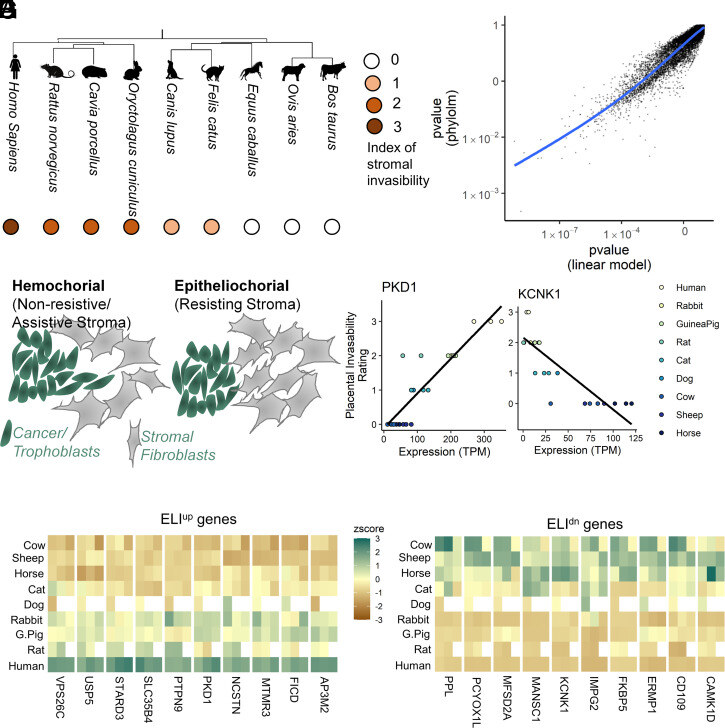
Before this I studied the evolved resistance of stroma to invasion, and its consequences for placental disorders such as placenta accreta and preeclampsia, as well as for cancer. I also studied how oscillatory hypoxia changes gene regulation in cancer and fibroblast cells. My earlier work includes graph-theoretic prediction of protein and genetic interactions, mathematical models of paracrine communication between cells, and signal processing for implantable neural electrode arrays.
I received my PhD in Biomedical Engineering from Johns Hopkins University (2017), my MS in Electrical Engineering from Michigan State University (2005), and my B.Tech in Electrical Engineering from IIT Delhi (2003).
Interests: computational modeling at cellular and tissue levels; AI over interaction networks for prognostics and -omics data; statistical models for heterotypic datasets.
Research areas (each links to the matching papers):
See my publications, projects and CV, or my Google Scholar profile.
news
| Apr 01, 2026 | Co-authored paper in Molecular Cell: in pancreatic cancer, tumor fluid together with low oxygen protects cells from ferroptosis, an iron-dependent form of cell death, and the factor HIF-2 coordinates that protection. |
|---|---|
| Nov 24, 2025 | Last-author paper in npj Systems Biology and Applications: simple gene-circuit models show how a cell can respond to cycling hypoxia differently from stable hypoxia, and experiments point to p53 and Notch1 as partners of HIF-1. |
| Oct 01, 2025 | Started as an Assistant Professor at the UConn Health Center, supported by my NICHD R00 award for AI models of maternal-fetal disorders. |
| Sep 04, 2025 | Co-authored paper in PNAS: invasive trophoblasts reshape the maternal stroma through IL-11, and the stroma has adapted in turn, so deep placental invasion evolved through changes on both the fetal and the maternal side. |
| Aug 22, 2025 | First-author paper in npj Systems Biology and Applications: an evolution-guided gene set that marks stromal vulnerability to invasion, with Nr2f6 and JDP2 shown to regulate stromal resistance in human fibroblasts. |
selected publications
- PNAS
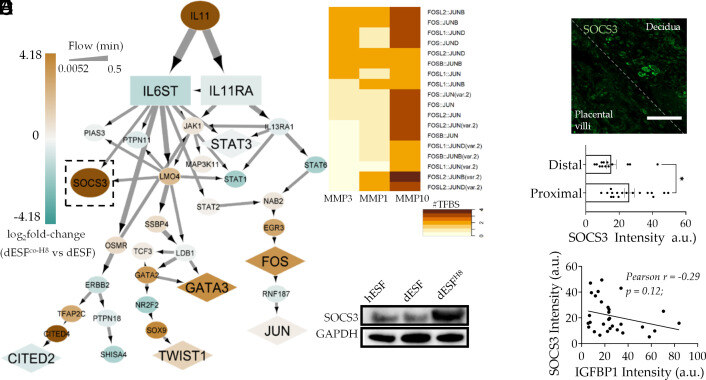 Evidence for coopetition at the maternal–fetal interface shaping placental invasionProceedings of the National Academy of Sciences, 2025
- npj SBA
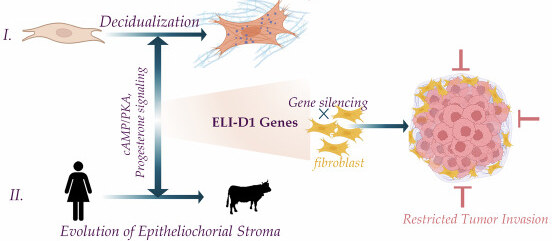 Identifying genes underlying parallel evolution of stromal resistance to placental and cancer invasionnpj Systems Biology and Applications, 2025
- npj SBA
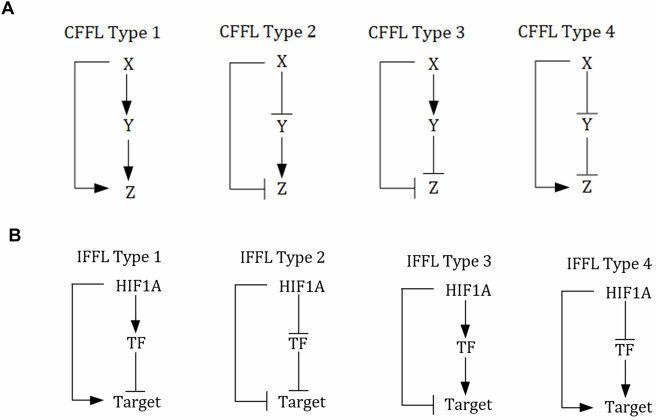 Hif-1 responsive IFFLs to explain specific transcriptional responses to cycling hypoxia in cancersnpj Systems Biology and Applications, 2025
- Nat Commun
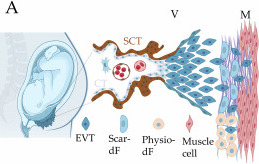 Scar matrix drives Piezo1 mediated stromal inflammation leading to placenta accreta spectrumNature Communications, 2024
- Mol CarcinogOscillatory hypoxia induced gene expression predicts low survival in human breast cancer patientsMolecular Carcinogenesis, 2024
- PNAS
 Tracing the cis-regulatory changes underlying the endometrial control of placental invasionProceedings of the National Academy of Sciences of the United States of America, 2022
- Cell Syst


