AI for maternal-fetal disease prognosis

Models that read the state of stromal cells at the maternal-fetal interface to predict pre-eclampsia and fetal growth disorders.

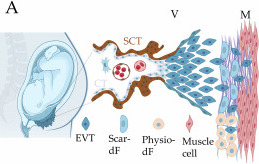
Multi-panel figure with a schematic of trophoblast invasion near a uterine scar, tissue sections, stiffness measurements and an in vitro invasion model.
Placenta accreta spectrum, from patient tissue to a laboratory model. Panel A sketches invading trophoblasts near a uterine scar; later panels show patient tissue, scar stiffness and the culture system used to test invasion. Source: Du et al., Nature Communications (2024), CC BY.

The full description of this project, with its approach, findings and figures, is on the Suhail Lab website.

Key papers: (Suhail et al., 2025; Afzal et al., 2025; Du et al., 2024).

References

2025

  1. Cells Dev
    Extravillous trophoblasts reverse the decidualization induced increase in matrix production by secreting TGFβ antagonists Emilin-1 and Gremlin-1
    Yasir Suhail, Yamin Liu, Junaid Afzal, Wenqiang Du, P. Robson, Ashkan Novin, and R. Ramasamy
    Cells & Development, 2025
  2. PNAS
    Afzal2025.jpg
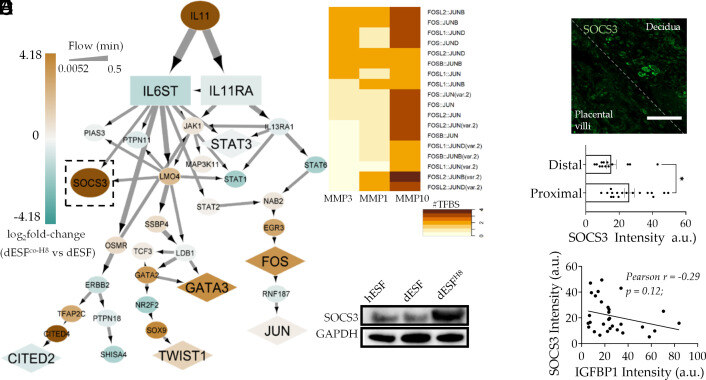
    Evidence for coopetition at the maternal–fetal interface shaping placental invasion
    Junaid Afzal, Yasir Suhail, Wenqiang Du, Yamin Liu, R. Ramasamy, Z. Liu, Ruchi Goyal, Ashkan Novin, S. Suhail, Jamie Maziarz, Günter P. Wagner, and  Kshitiz
    Proceedings of the National Academy of Sciences, 2025

2024

  1. Nat Commun
    Du2024.jpg
    Scar matrix drives Piezo1 mediated stromal inflammation leading to placenta accreta spectrum
    Wenqiang Du, Ashkan Novin, Yamin Liu, Junaid Afzal, Yasir Suhail, Shaofei Liu,  others, and  Kshitiz
    Nature Communications, 2024